Why Online Reviews Matter More in the Age of AI Search
Online reviews are becoming more important as AI changes how consumers discover and evaluate local businesses. Learn how review quality, recency, sentiment, and customer experiences can strengthen trust and support visibility across modern search.


For years, online reviews have helped people decide which local businesses deserve their attention. A strong collection of positive reviews could reassure a homeowner choosing a contractor, a patient comparing providers, or a customer deciding where to spend money.
That role has not disappeared. It is becoming more important.
Search is expanding beyond a traditional list of blue links. Consumers can now ask Google, ChatGPT, and other AI-powered tools detailed questions about businesses, services, experiences, and recommendations. Instead of searching only for “plumber near me,” someone might ask which local plumber has a reputation for responding quickly, communicating clearly, and handling emergency repairs.
That changes what businesses should consider when managing their online reputation.
Reviews contain more than star ratings. They contain customer language, experiences, service details, recurring themes, and sentiment that can help digital platforms understand what a business is known for. Google itself uses AI-generated review summaries in some local experiences to highlight themes found across customer reviews.
Reviews Have Always Influenced Customers. AI Changes Their Role
Online reviews have traditionally operated near the decision stage of the customer journey.
A person discovers several businesses, compares their options, checks ratings and reviews, and then decides which company feels trustworthy enough to call, visit, or hire.
That behavior remains important. What is changing is where reviews can enter the discovery process.
AI-powered search allows consumers to ask much more specific questions. Someone looking for an HVAC contractor might not simply search “AC repair near me.” They could ask for an HVAC company in their area that customers describe as responsive, professional, and good at explaining repair options.
A homeowner could ask for highly reviewed landscaping companies known for communication and reliable scheduling. A consumer researching a restaurant could ask which nearby option receives positive feedback for a particular dish or dining experience.
These queries are conversational, detailed, and often built around attributes that may appear naturally in customer feedback.
This is one reason businesses need to think beyond rankings alone. As discussed in how AI search is changing SEO, visibility can increasingly occur inside generated answers and recommendations as well as conventional search results.
Reviews can contribute useful context to that wider information environment.
A traditional review strategy might ask:
How many reviews do we have?
A stronger question for the AI search era is:
What do our reviews consistently tell people and search platforms about our business?
That distinction matters because two businesses with similar ratings can have very different review profiles.
One may have dozens of short comments such as “Great service.”
Another may have customers consistently discussing specific services, responsiveness, staff professionalism, communication, locations served, and the problems the business helped them solve.
Both forms of positive feedback are valuable. The second, however, provides considerably more context about the actual customer experience.
How AI Search Can Use Review Information
It is important not to overstate what reviews do.
There is no basis for promising that collecting a certain number of reviews will make a business appear in ChatGPT or guarantee inclusion in an AI-generated recommendation. Different platforms use different systems, data sources, and methods for generating answers.
What we can see clearly is that AI is increasingly being used to interpret large amounts of customer feedback.
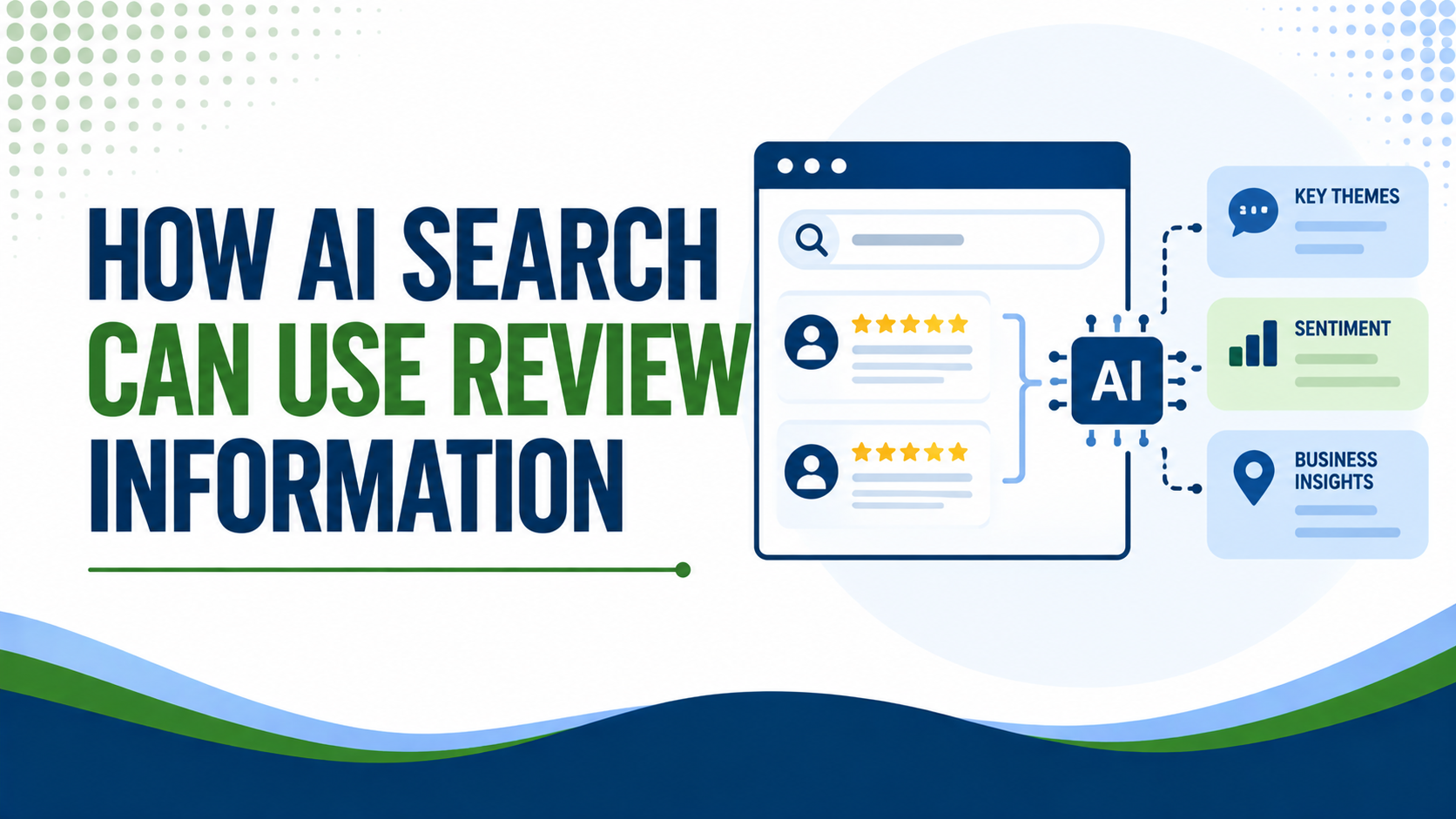
Google, for example, can provide AI-powered review summaries that identify common themes and sentiment across reviews. Instead of requiring someone to manually read dozens or hundreds of individual comments, technology can synthesize that information into a more manageable overview.
That represents an important shift.
Reviews are no longer useful only when a prospective customer reads them individually. The information contained inside a collection of reviews can also be analyzed and summarized.
Consider a plumbing company whose customers repeatedly mention:
- Fast response times
- Water heater repairs
- Clear explanations
- Clean workmanship
- Friendly technicians
- Upfront communication
Those individual reviews collectively create a much richer description of the company than its star rating alone.
The same principle applies across industries.
Reviews for a dental practice might repeatedly mention gentle care and appointment scheduling. Reviews for a remodeling contractor could discuss communication, project cleanliness, and kitchen renovations. Reviews for an HVAC company might repeatedly reference AC repair, maintenance, punctuality, or technicians explaining different options.
This is why businesses should avoid viewing online reviews as isolated testimonials. Together, they form a body of customer-generated information about the brand.
AI Can Read the Story Your Reviews Tell About Your Business
Every authentic review adds another piece to the public story surrounding a business.
One customer might talk about the service they purchased. Another may mention how quickly the company responded. Someone else might describe an employee, neighborhood, product, or specific problem that was solved.
As those experiences accumulate, patterns can emerge.
The important word here is authentic.
Businesses should not tell customers which keywords to use, provide scripted review language, or attempt to manufacture particular themes. That creates a poor customer experience and can conflict with platform policies.
Instead, businesses should focus on delivering experiences customers genuinely want to describe.
When the service itself is consistent, the review profile can begin reflecting that consistency naturally.
This also connects online reputation management with the fundamentals of Google Business Profile optimization. A business's profile, categories, services, photos, business information, and reviews collectively help customers evaluate whether it appears relevant to their needs.
The strongest reputation strategy therefore starts offline.
Review Quantity Alone Is Not Enough
For a long time, businesses have treated review count as the headline metric for reputation management.
More reviews certainly have value. A business with a substantial history of genuine customer feedback can give potential customers more information to consider than a business with only a handful of reviews.
But volume does not tell the entire story.
In an environment where reviews can be analyzed, summarized, and compared, businesses should pay attention to the information contained within those reviews as well.
A modern review profile has several dimensions:
- Quantity: How many customers have shared feedback?
- Quality: What kinds of experiences are customers describing?
- Recency: Are customers still reviewing the business today?
- Consistency: Do similar themes appear across multiple reviews?
- Sentiment: What positive or negative experiences appear repeatedly?
- Detail: Do reviews provide meaningful context about the service or customer experience?
Imagine two companies both have a 4.8-star rating.
The first received most of its reviews several years ago and has generated very little recent feedback.
The second receives new reviews consistently, with customers describing recent services, interactions with employees, communication, and specific experiences.
A prospective customer may see both businesses as highly rated, but the second review profile provides a more current picture of what doing business with the company is actually like.
That distinction becomes even more meaningful when technology can synthesize large amounts of customer feedback.
Why Review Recency Matters
People want to know what a business is like now.
A glowing review from four years ago may still demonstrate that someone had a positive experience, but it does not necessarily tell a prospective customer whether the company is delivering the same experience today.
Businesses change.
Employees change. Services expand. Management changes. Locations open and close. Processes improve. Customer expectations evolve.
A steady flow of recent online reviews helps create a more current representation of the business.
This does not mean businesses should suddenly generate dozens of reviews in a short period and then stop asking customers for feedback. A more sustainable approach is to incorporate review requests into the normal customer experience.
For example, a home service company might request feedback after completing a job. A dental practice could follow up after an appointment. A retailer might invite customers to review their experience after a purchase.
The objective should be consistency rather than a temporary spike in review volume.
For businesses competing for local visibility, this process should also fit within a broader local SEO strategy that addresses Google Business Profile optimization, local listings, search visibility, and the accuracy of business information across the web.
Reviews are important, but they work best as one component of a complete local presence.
Google Reviews Still Matter, but Your Reputation Should Go Beyond Google
Google is naturally one of the first platforms local businesses think about when discussing online reviews.
That makes sense. Google Search and Google Maps are major discovery environments for local businesses, and reviews are highly visible within Google Business Profiles.
But customer discovery is becoming more fragmented.
Someone might encounter a company through Google, then look at its social profiles, website, industry directories, or other review platforms before making a decision. Another person might begin the process by asking an AI assistant for recommendations.
The exact sources used by an AI-powered system can vary by platform, query, and available information. Businesses therefore should not assume that reputation management begins and ends with one platform.
A broader approach asks:
Where do our customers research businesses like ours?
For one industry, Google may dominate. In another, customers may also rely heavily on Facebook, Yelp, industry-specific directories, social platforms, or other third-party sources.
Businesses do not need to chase every review platform on the internet. They should identify the platforms that genuinely matter to their customers and maintain an accurate, credible presence there.
This is also where consistent business information becomes important.
Your company name, location, contact information, services, website, business descriptions, and other important details should accurately represent the same organization wherever customers encounter it.
That creates a more coherent digital footprint.
How Online Reviews Can Support Local Search and AI Visibility
Reviews should not be treated as a shortcut to rankings or AI recommendations.
No legitimate marketing strategy can promise that collecting a specific number of reviews will make a business appear in an AI-generated answer.
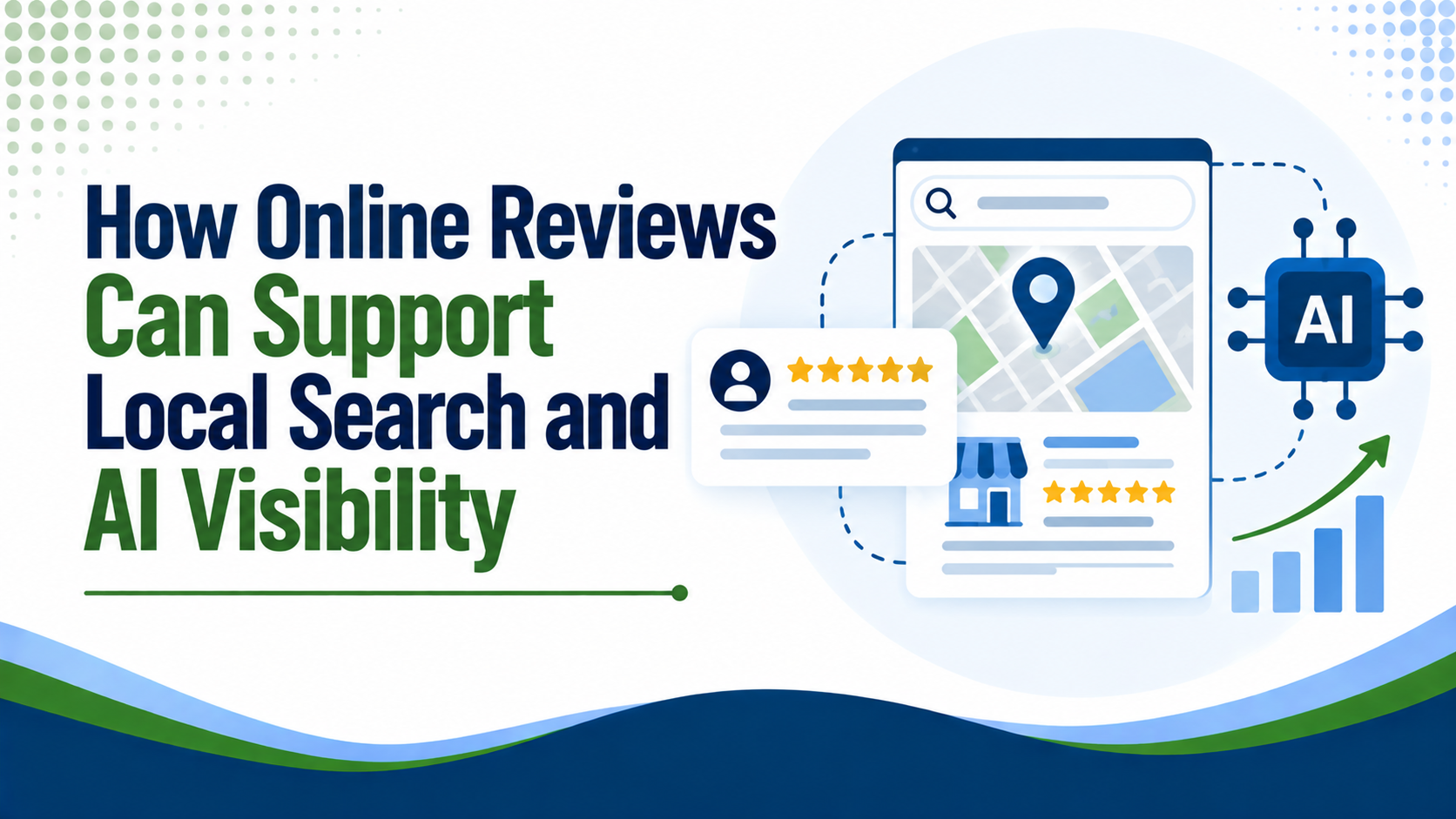
Instead, think about reviews as one layer of evidence within a much larger digital presence.
Search engines and AI-powered discovery systems can encounter information about a business from many sources. Those may include the company's website, business listings, third-party websites, structured information, published content, and customer-generated material.
The clearer and more consistent that overall presence becomes, the easier it can be for people and digital systems to understand the business.
This is why online reputation should complement professional search engine marketing, rather than operate as an isolated activity.
A business needs its own website and content to clearly explain what it does. Its local profiles should accurately represent where and how it operates. Its marketing should help customers discover those assets. Reviews then add the perspective of people who have actually interacted with the company.
Together, those signals create a more complete picture.
Build Reviews Around the Customer Experience
A strong review strategy begins before anyone receives a review request.
It begins with the experience itself.
Marketing can encourage satisfied customers to share feedback, but it cannot sustainably compensate for poor communication, unreliable service, or inconsistent customer experiences.
Businesses should therefore look at review generation as the final stage of a larger process:
Deliver → Ask → Respond → Learn → Improve
Deliver a Review-Worthy Experience
Customers need something genuine to evaluate.
That does not require every interaction to be extraordinary. Often, customers value the fundamentals: showing up when promised, communicating clearly, solving the problem, treating them respectfully, and making the process easy.
Those operational details frequently become the substance of the most useful reviews.
Ask at the Right Moment
The best time to request a review is usually after a meaningful positive interaction has occurred.
That might be after:
- A service has been completed
- A project has been delivered
- A customer has received their purchase
- A problem has been resolved
The request should be straightforward and easy to complete.
Businesses can use email, text messaging, receipts, follow-up systems, or other appropriate customer communication channels to make the review process convenient.
Make the Review Process Simple
Every unnecessary step creates friction.
If a customer has to search for the business, find the correct profile, locate the review section, and figure out what to do next, many satisfied customers will simply move on with their day.
Where platform rules allow it, businesses can provide a direct route to the appropriate review page.
The easier the process becomes, the more likely customers who genuinely want to share feedback can do so.
Never Script What Customers Should Say
Businesses understandably want reviews that describe their services in detail.
That does not mean they should hand customers a list of keywords or tell them exactly what to write.
The value of online reviews comes from genuine customer experiences expressed in the customer's own language.
A better request is neutral.
Ask customers to share their experience rather than instructing them to mention a particular service, employee, city, or positive attribute.
If your company consistently provides excellent service, relevant themes should emerge naturally.
Respond to Positive and Negative Reviews
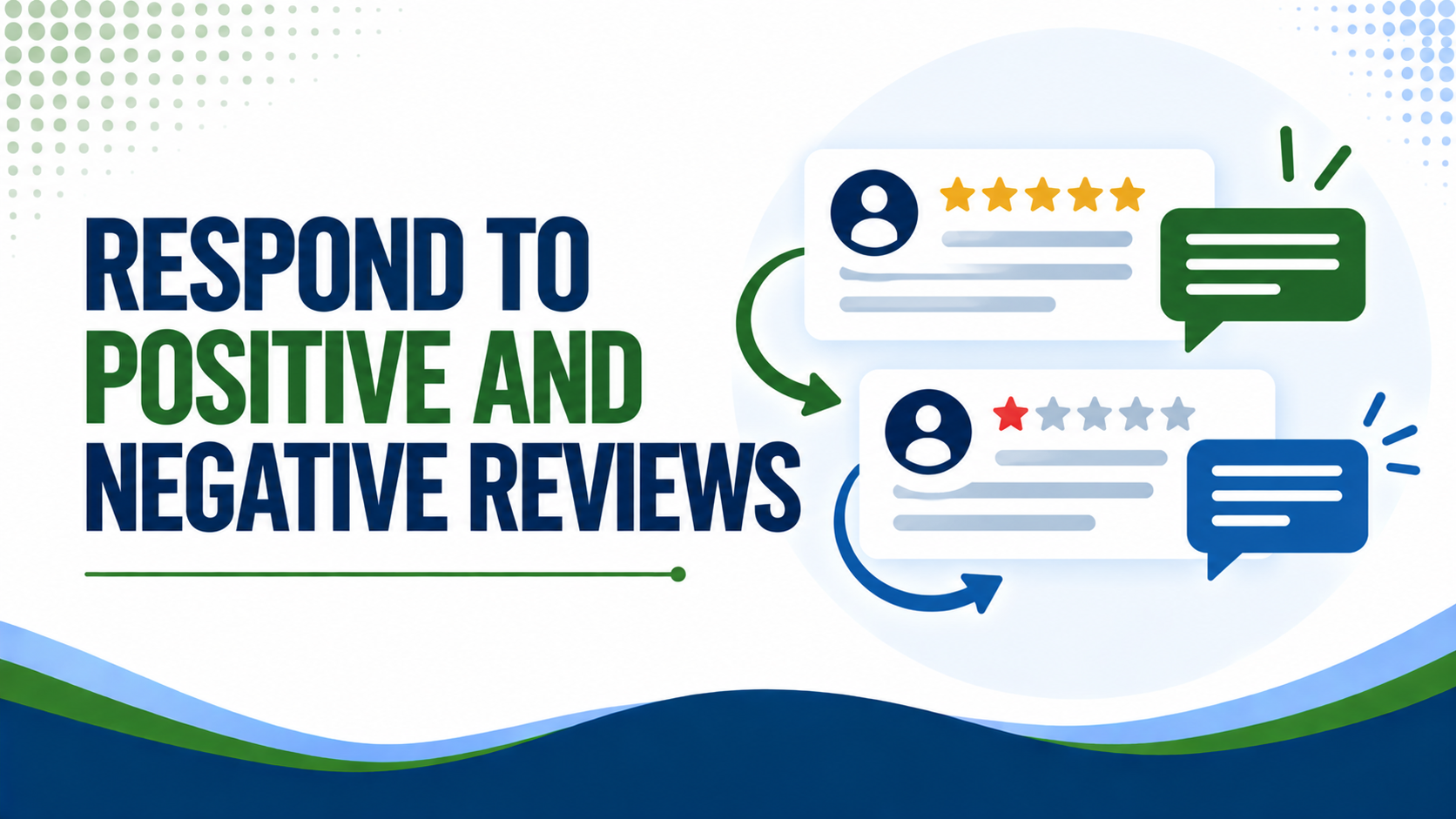
Review management should not end when a customer clicks “Post.”
Responses give businesses an opportunity to acknowledge feedback, demonstrate attentiveness, and show future customers that someone is listening.
Positive reviews deserve genuine acknowledgment. The response does not need to be long or stuffed with promotional language.
Negative reviews require even more care.
Avoid turning the response into a public argument. A professional reply can acknowledge the customer's concern and, when appropriate, move the detailed conversation into a private channel where the issue can be investigated.
The objective is not to win an argument beneath a review.
It is to demonstrate how the business handles feedback.
This matters because the response is not only for the original reviewer. Future customers may read the exchange while evaluating whether they feel comfortable choosing the company.
Monitor the Themes Customers Mention
Online reviews can also function as a source of customer insight.
Instead of looking only at average rating and total volume, periodically examine what customers actually say.
Which words and experiences appear repeatedly?
Are customers praising something the company did not realize was a competitive strength?
Are they repeatedly confused by the same part of the customer journey?
Do customers frequently mention a particular employee, service, location, or process?
Are complaints revealing an operational problem that should be addressed?
These patterns can inform far more than reputation management.
They can influence website copy, FAQs, sales conversations, customer service training, content strategy, and advertising.
If customers repeatedly praise fast communication, for example, that may be an important part of the company's value proposition.
Businesses can even use recurring customer language to inspire creative messaging for paid advertising campaigns, while still ensuring that advertising claims are accurate and appropriately supported.
Build Reviews Consistently Instead of in Bursts
One of the most common mistakes businesses make is paying attention to reviews only when something triggers concern.
A competitor suddenly has more reviews.
A negative review lowers the average rating.
The company launches a new location.
Someone realizes nobody has asked customers for feedback in six months.
The team then launches an aggressive review campaign, collects a batch of new reviews, and stops again.
A more sustainable strategy incorporates review generation into normal operations.
A consistent process removes the need to panic about reviews.
It turns reputation management into part of the business rather than an occasional marketing project.
Measure More Than Your Star Rating
Star ratings provide an immediate snapshot, but they should not be the only measure of review performance.
Businesses can monitor several indicators to develop a more useful understanding of their reputation:
- Total number of reviews
- Average rating
- Number of recent reviews
- Frequency of new reviews
- Common positive themes
- Common negative themes
- Reviews mentioning specific services
- Customer sentiment
- Business response rate
- Changes in customer inquiries or conversions
The objective is not to turn reputation into another collection of vanity metrics.
The real question is whether a strong online reputation contributes to greater trust and helps qualified customers feel more confident choosing the business.
That is where reviews connect to broader marketing performance.
Online Reviews Should Work Across the Customer Journey
The value of a strong review profile does not have to remain confined to Google or another review platform.
With appropriate permissions and accurate attribution, businesses can incorporate genuine customer feedback into other parts of their marketing.
Testimonials can reinforce service pages. Customer experiences can inspire case studies. Common questions found in reviews can influence educational content. Feedback can help sales teams understand what customers value most.
Reviews can also help businesses identify the language customers naturally use when describing their problems.
Marketing teams often describe services using internal terminology. Customers may describe the same service very differently.
That difference matters.
Listening to customer language can help businesses make their website and marketing easier to understand.
This creates a useful cycle:
Customer Experience → Review → Insight → Better Marketing → Better Customer Experience
The review is no longer simply the final step after a sale. It becomes information the organization can use to improve the next customer's journey.
Build a Reputation That Works Wherever Customers Search
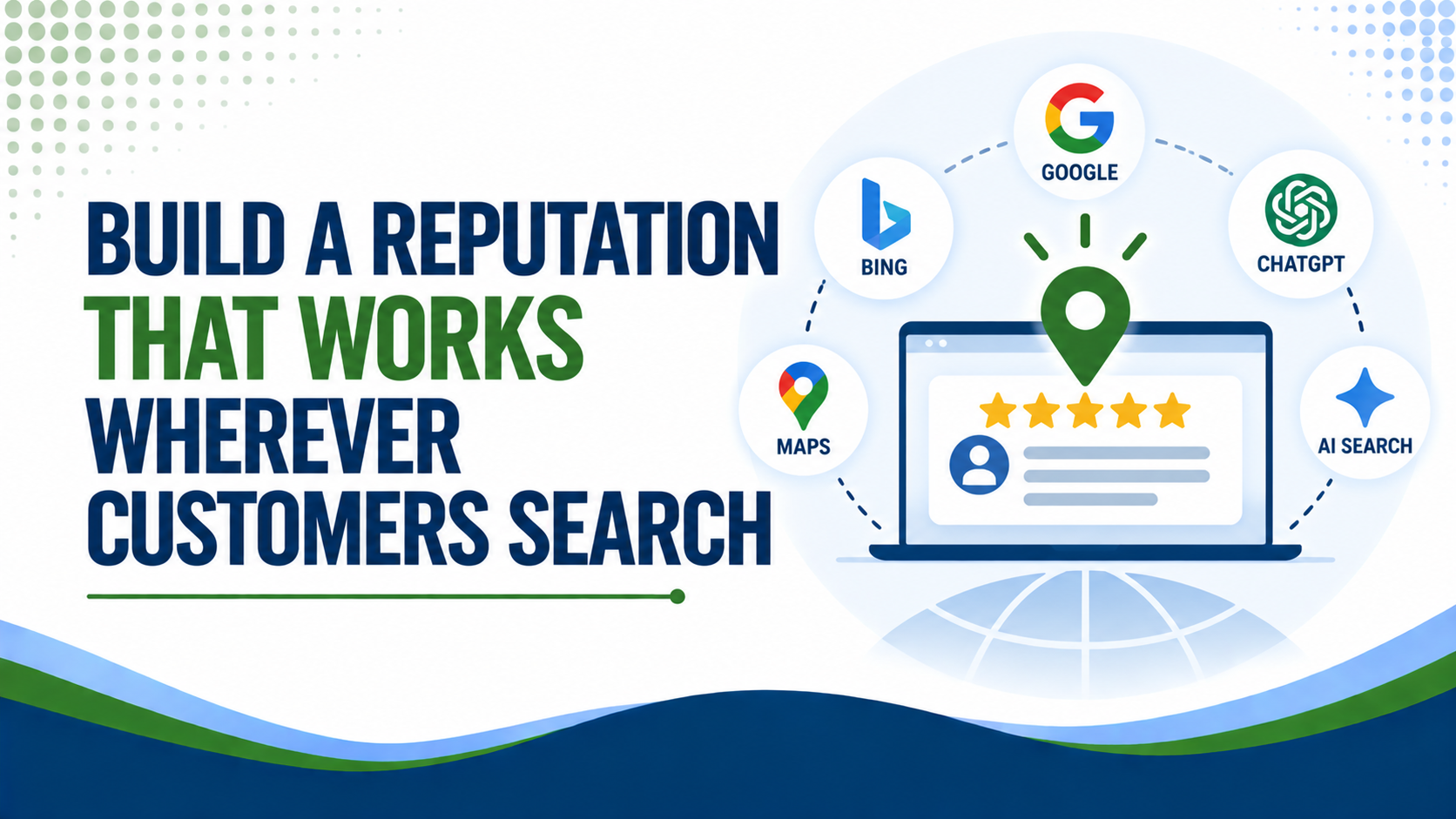
The rise of AI search does not make traditional reputation management obsolete. It makes building a clear and trustworthy digital reputation even more important.
Potential customers still care about ratings. They still read individual reviews. They still look for recent experiences and want reassurance that a company can deliver what it promises.
What is changing is how that information can be discovered and interpreted.
AI-powered search experiences can help people process information from across the web, summarize customer sentiment, and answer increasingly detailed questions about businesses.
That means companies should stop thinking about online reviews as nothing more than a number displayed beside their business name.
Each authentic review contributes another piece of customer-generated context.
Over time, those experiences can communicate what the company does, how it treats customers, which services people associate with it, and whether its reputation remains consistent.
Businesses cannot control exactly what customers say, nor should they try.
They can control the experience they deliver, how easy they make it for customers to provide honest feedback, how professionally they respond, and whether they use that feedback to improve.
In the age of AI search, the businesses with the strongest foundations will not necessarily be those chasing the newest optimization trick. They will be businesses creating enough consistent, trustworthy information for customers to understand who they are and why people choose them.
A strong online review strategy is one important part of building that foundation.